Introduction
These are my personal notes taken from several interesting papers I have found to create a current image of the way that fungi, in particular Pestalotiopsis microspora hereon known as P.microspora, are used to synthesise plastics. This is a particular passion area of mine that I fear will forever be out of reach for me as I detest chemistry with a passion.
Many interesting things about the way this fungi have been studied comes to light in this paper. I would first like to acknowledge that nothing about P.microspora is new in any regard, in that it was researchers in the Amazonian rainforests in the 1980s that first discovered the plastic-synthesis capabilities of several varieties of the P.microspora variety, and in fact have found this capability amongst other fungi also.
It is an exciting time for this area of research in this field. Not only are global sources of plastics and crude oils shrinking, the use of virgin plastics is becoming increasingly rejected, at least from a moral perspective, and sometimes from a lawful one also, by many countries in the world. Recently Spain (King, 2022) has become a world-leading country on plastic waste reduction by imposing a tax on the plastics generated by companies, but more work needs to be done globally before issues such as the "plastic islands" and microplastics are no longer an issue.
For now, research is in its infancy. The use of mycological products such as the mycelium, the spongey material that we never really think of as the “mushroom” (mushroom, in fact, is just the fruiting body that further reproduces the fungal network by the dissemination of spores), in terms of its environmental properties such as a fantastically light and environmentally friendly thermal insulation, or strong brick like material that can be used for construction (D Sharma, 2025), as well as other products. We of course have many products that we rely on from mycology in general such as all kinds of drugs, but largely their ability in terms of environmental breaking down products have yet to be discovered in more detail.
Pestalotiopsis microspora
I will say that the P.microspora is an incredibly interesting thing from a biological perspective, because of the unique way it presents as a pathogen - see article re rotting Kiwi fruit exports from China - (L Deng et al, 2024), an endophyte, by colonising leafs, stems and flowers, (see article on the way this has been diagnosed by J Russel 2011) as well as a saprophyte, which means that it lives entirely on dead things. It has an interesting ability to adapt best to whichever environment it seems to find itself in, making it particularly useful from a cultivate point of view. Because of this, the biology of this species, as well as other Pestalotiopsis species, is still largely unclear, particularly in what concerns the relationship that the fungus can establish with the plants (L Deng et al, 2024).
It is presumed to be a “opportunistic pathogen”, and will remain dormant as an endophyte (something that lives without harming the plant) until the plant is stressed, and then switches life mode to pathogen, leading to disease development.
Species Outline
Pestalotiopsis microspora is most commonly associated with tropical and semi‐tropical plant species (L Deng et al, 2024). It has been isolated as a saprophyte from bark and decaying plant material, and as an endophyte from stems, leaves, flowers and fruits. It has also been reported to cause diseases on a wide range of monocotyledonous, dicotyledonous and gymnosperms, either cultivated or wild plant species. In general, Pestalotiopsis species are not considered to be host‐specific (J Russel 2011).
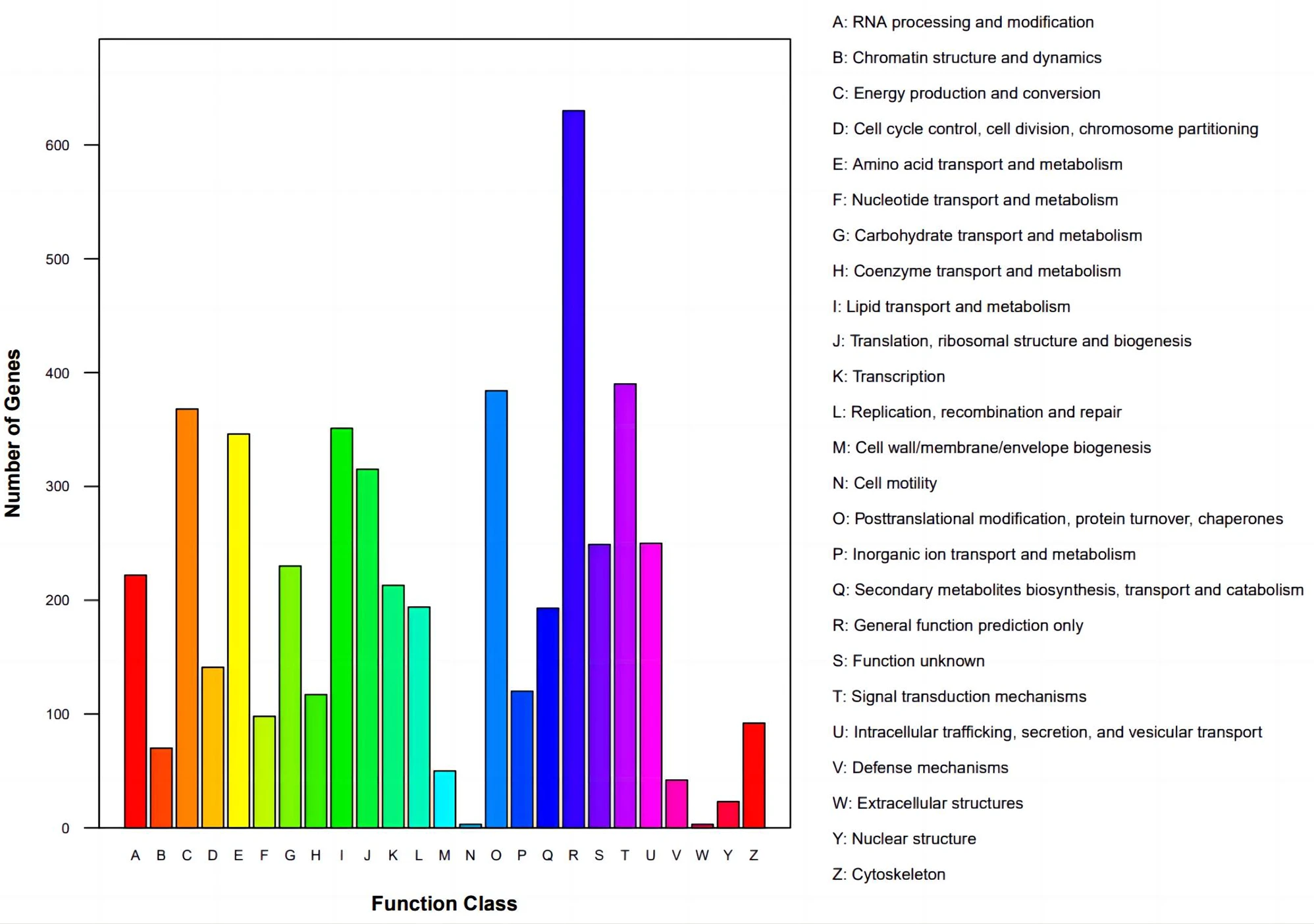
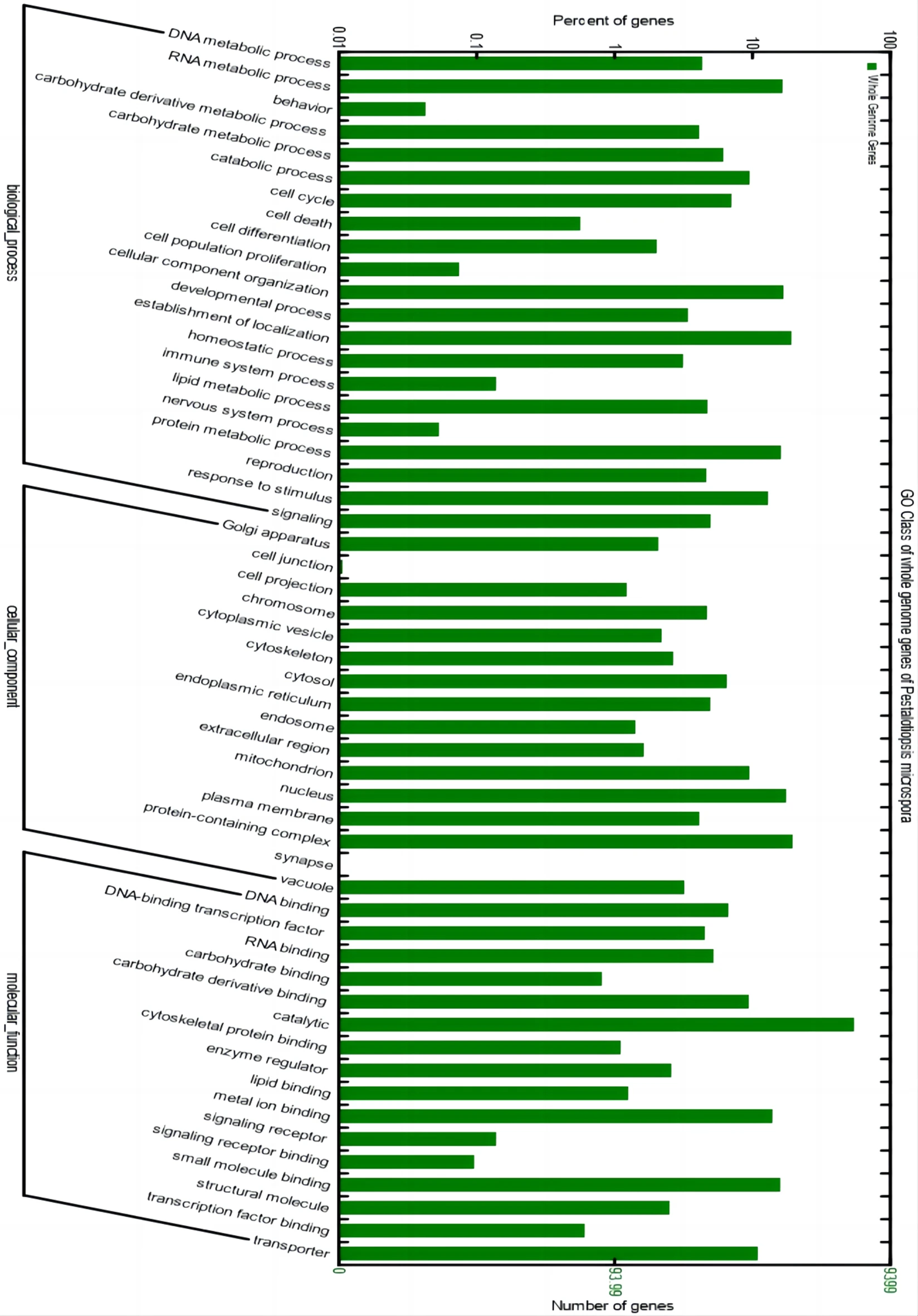
Indeed, when it comes to this, the insight from a particular paper (Deng L, et al, 2025) published gives further insight into the RNA and DNA of the structure of this particular fungi appears to give some interesting ideas as to the genetic makeup of the fungus. A large component of the fungi’s DNA is related to proteins and lipid transformation.
This paper points out that some of the functions are still unknown. But, when it comes to this paper, it gives a strong picture of the genetic makeup: for instance, a large component of the fungi’s DNA is related to proteins and lipid transformations, see bottom section "lipid binding" under "molecular_functions", accounts for nearly 10% of all genes. Another important one for nutrient conversion, "catalytic" comes in at more than 60% of all composition of the genes.
Recent studies
Another study (J Russel, et al 2011) successfully demonstrated that this variety is a strong contender for more research in plastic bioremediation. Initial screening of 59 fungal endophytes revealed significant polyurethane (PUR) degradation activity in 18 isolates, marking this as the first study to show PUR degradation by endophytic fungi and suggesting that this biological niche is promising for discovering novel metabolic capabilities. The strongest performing members were in the Ascomycota phylum, particularly among members of the genus Pestalotiopsis.
The most significant discovery centred on two isolates of Pestalotiopsis microspora, which were able to effectively and efficiently degrade and utilise PUR as the sole carbon source under anaerobic conditions. This is a crucial finding because it suggests that this organism could be applied in controlled, oxygen-deprived environments, such as anaerobic fermentation systems, for waste processing. The high efficiency of the organism was evident, with its degradation activity being equivalent in both aerobic and anaerobic conditions, a stark contrast to known PUR-degrading control fungi.
If one has a mind for the chemical details and the ways in which these fungi were studies, significant detail is given in the paper as to the growing conditions (sterile culture environments, etc). It lead to the understanding of the process behind these fungi, namely, research successfully characterised the enzymatic mechanism responsible for the degradation, identifying it as an extracellular, inducible serine hydrolase with an approximate molecular mass of 21 kDa. This enzyme is secreted into the medium and acts by what is known as “hydrolysing” the ester bonds in the PUR polymer.
Hydrolyses are simply a class of enzymes like lipases, proteases, and nucleases, which act to make chemical reactions easier to occur. It just makes whatever reaction easier to occur. So these can be things like, for instance, the case of the fungus, where the compound is “serine hydrolase” which is in fact created by the fungi, expressed, and then creates an environment for them where it is easier to breakdown the binds in the plastic, and therefore begin degradation. They act as highly specific and powerful hydrolyzing agents (Howard, G, 2002). They contain active sites that precisely orient the water molecule to cleave specific chemical bonds at rapid rates under mild conditions.
What is even more remarkable is they did so within the space of an hour: A cell extract of the active culture containing a critical serine hydrolase is able to clear the polymer in under 1 hour using the PUR concentrations reported here. This is particularly interesting for us and we will continue to see how this comes about as useful from the perspective of other researcher.
The ability of the crude enzyme extract to rapidly clear the polymer suspension (in under an hour) validates its strong potential. This work establishes Pestalotiopsis microspora and endophytes in general as a valuable resource, providing a highly active and versatile biological tool for advancing plastic waste management.
A preemptive review of Reddit and other blogs online appear to have had differing levels of success, but most successful mimick the tropical results within which the species was originally found, high humidity and temperature range between 24-25 degrees Celsius.
Recent industries
Other plastics?
There are other plastics that need to be analysed further. For full background, there are seven major types of synthetic plastic are used around the world. These are polyethylene terephthalate (PET), high-density polyethylene (HDPE), polyvinyl chloride (PVC), low-density polyethylene (LDPE), polypropylene (PP), polystyrene (PS). These all need effective bioremediation solutions.
News from Australia
One of these have already been shown to quite effective polypropylene. At the University of Sydney in 2023, two fungi Aspergillus terreus and Engyodontium album, which fall into the category of endocytes (as living in the plant and soil). It took 90 days for the fungi to degrade 27 per cent of the plastic tested, and about 140 days to completely break it down, after the samples were exposed to ultraviolet rays or heat.
Positive side-notes re plastic waste
Spains plastic tax has been in place for more than 2 years now - the tax equals EUR 0.45 per kilogram of non-reusable plastic and is accrued, in the case of manufacture, at the time when the first delivery is made to the purchaser; in the case of importation, at the time import duties are also accrued; and in cases of intra-Community acquisition, on the 15th day of the month following that in which the transport of the product begins.
References
Clegg, C. J.; Mackean, D. G. (2006). Advanced Biology: Principles and Applications (2nd ed.). Hodder Publishing.
Deng, L., Qiu, X., Su, Q. et al. Complete genome sequence analysis of Pestalotiopsis microspora, a fungal pathogen causing kiwifruit postharvest rots. BMC Genomics 25, 839 (2024). https://doi.org/10.1186/s12864-024-10751-y
Russell J, RHuang JAnand PKucera K, Sandoval AG, Dantzler KW, Hickman D, Jee J, Kimovec FM, Koppstein D, Marks DH, Mittermiller PA, Núñez SJ, Santiago M, Townes MA, Vishnevetsky M, Williams NE, Vargas MPN, Boulanger L, Bascom-Slack C, Strobel SA 2011. Biodegradation of Polyester Polyurethane by Endophytic Fungi. Appl Environ Microbiol 77:. https://doi.org/10.1128/AEM.00521-11
Gary T. Howard, Biodegradation of polyurethane: a review, International Biodeterioration & Biodegradation, Volume 49, Issue 4, 2002, Pages 245-252, ISSN 0964-8305, https://doi.org/10.1016/S0964-8305(02)00051-3.
Sharma, D., Le Ferrand, H. 3D printed gyroid scaffolds enabling strong and thermally insulating mycelium-bound composites for greener infrastructures. Nat Commun 16, 5775 (2025). https://doi.org/10.1038/s41467-025-61369-x
Turrell, C. Fungal detox: investors eye mycelium bioremediation. Nat Biotechnol 42, 998–1000 (2024). https://doi-org.ezproxy-b.deakin.edu.au/10.1038/s41587-024-02315-y
Ekanayaka, A. H., Tibpromma, S., Dai, D., Xu, R., Suwannarach, N., Stephenson, S. L., Dao, C., & Karunarathna, S. C. (2022). A Review of the Fungi That Degrade Plastic. Journal of Fungi, 8(8), 772. https://doi.org/10.3390/jof8080772
Samat et al, 2023, couldn’t find original paper, URL: https://www.sydney.edu.au/news-opinion/news/2023/04/14/fungi-makes-meal-of-hard-to-recycle-plastic.html
King, 2022, Law 7/2022, of April 8, on waste and contaminated soils for a circular economy, https://www-boe-es.translate.goog/eli/es/l/2022/04/08/7/con?_x_tr_sl=auto&_x_tr_tl=en&_x_tr_hl=en-US&_x_tr_pto=wapp
Back to Top